


Every year, venomous snakes kill over 100,000 people and leave 300,000 more with devastating injuries — amputations, paralysis and permanent disabilities. The victims are often farmers, herders and children in rural communities across sub-Saharan Africa, South Asia and Latin America. For them, a snakebite isn’t just a medical crisis — it’s an economic catastrophe.
Treatment hasn’t changed in over a century. Antivenoms — derived from the blood of immunized animals — are expensive, difficult to manufacture and often ineffective against the deadliest toxins. Worse, they require refrigeration and trained medical staff, making them unreachable for many who need them most.
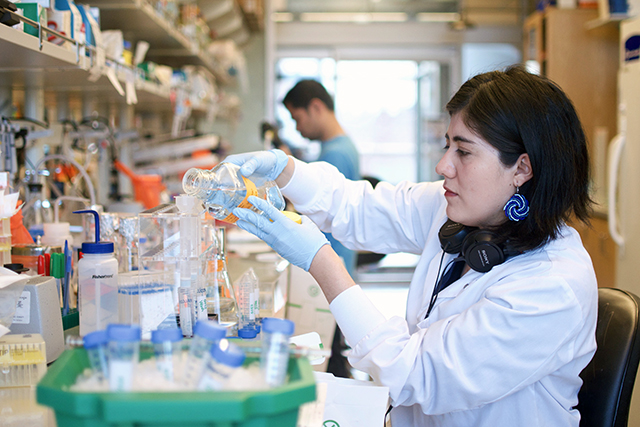
Now, a team led by Susana Vázquez Torres, a computational biologist working in Nobel Prize winner David Baker’s renowned protein design lab at the University of Washington, has used AI to create entirely new proteins that neutralize lethal snake venom in laboratory tests — faster, cheaper and more effectively than traditional antivenoms. Their research, published in Nature, introduces a new class of synthetic proteins that successfully protect animals from otherwise lethal doses of snake venom toxins.

How AI Cracked the Code on Venom
For over a century, antivenom production has relied on animal immunization, requiring thousands of snake milkings and plasma extractions. Torres and her team hope to replace this with AI-driven protein design, compressing years of work into weeks.
Using NVIDIA Ampere architecture and L40 GPUs, the Baker Lab used its deep learning models, including RFdiffusion and ProteinMPNN, to generate millions of potential antitoxin structures ‘in silico,’ or in computer simulations. Instead of screening a vast number of these proteins in a lab, they used AI tools to predict how the designer proteins would interact with snake venom toxins, rapidly homing in on the most promising designs.
The results were remarkable:
- Newly designed proteins bound tightly to three-finger toxins (3FTx), the deadliest components of elapid venom, effectively neutralizing their toxic effects.
- Lab tests confirmed their high stability and neutralization capability.
- Mouse studies showed an 80-100% survival rate following exposure to lethal neurotoxins.
- The AI-designed proteins were small, heat-resistant and easy to manufacture — no cold storage required.
A Lifeline for the Most Neglected Victims
Unlike traditional antivenoms, which cost hundreds of dollars per dose, it may be possible to mass-produce these AI-designed proteins at low cost, making life-saving treatment available where it’s needed most.
Many snakebite victims can’t afford antivenom or delay seeking care due to cost and accessibility barriers. In some cases, the financial burden of treatment can push entire families deeper into poverty. With an accessible, affordable and shelf-stable antidote, millions of lives — and livelihoods — could be saved.
Beyond Snakebites: The Future of AI-Designed Medicine
This research isn’t just about snakebites. The same AI-driven approach could be used to design precision treatments for viral infections, autoimmune diseases and other hard-to-treat conditions, according to the researchers.
By replacing trial-and-error drug development with algorithmic precision, researchers using AI to design proteins are working to make life-saving medicines more affordable and accessible worldwide.
Torres and her collaborators — including researchers from the Technical University of Denmark, University of Northern Colorado and Liverpool School of Tropical Medicine — are now focused on preparing these venom-neutralizing proteins for clinical testing and large-scale production.
If successful, this AI-driven advancement could save lives, and uplift families and communities around the world.