


NVIDIA and Cisco Weave Fabric for Generative AI
Building and deploying AI applications at scale requires a new class of computing infrastructure — one that can handle the massive amounts of data, compute power and networking bandwidth needed by generative AI models. To better ensure these models perform optimally and efficiently, NVIDIA is teaming with Cisco to enable enterprise generative AI infrastructure. Cisco’s …
Digital Bank Debunks Financial Fraud With Generative AI
European neobank bunq is debunking financial fraudsters with the help of NVIDIA accelerated computing and AI. Dubbed “the bank of the free,” bunq offers online banking anytime, anywhere. Through the bunq app, users can handle all their financial needs exclusively online, without needing to visit a physical bank. With more than 12 million customers and …
Digital Bank Debunks Financial Fraud With Generative AIRead More
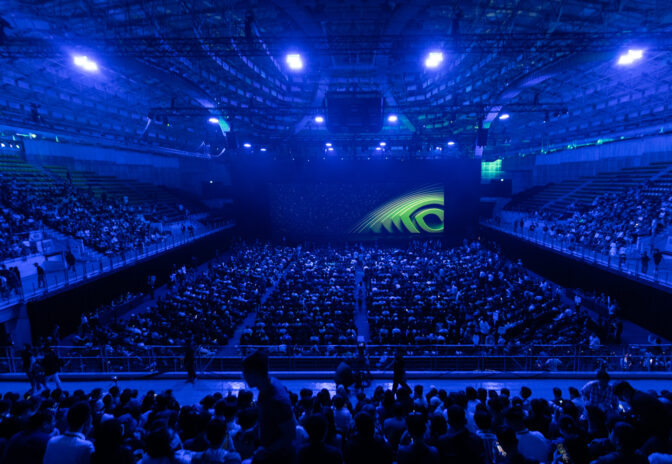
‘Accelerate Everything,’ NVIDIA CEO Says Ahead of COMPUTEX
“Generative AI is reshaping industries and opening new opportunities for innovation and growth,” NVIDIA founder and CEO Jensen Huang said in an address ahead of this week’s COMPUTEX technology conference in Taipei. “Today, we’re at the cusp of a major shift in computing,” Huang told the audience, clad in his trademark black leather jacket. “The …
‘Accelerate Everything,’ NVIDIA CEO Says Ahead of COMPUTEXRead More
KServe Providers Dish Up NIMble Inference in Clouds and Data Centers
Deploying generative AI in the enterprise is about to get easier than ever. NVIDIA NIM, a set of generative AI inference microservices, works with KServe, open-source software that automates putting AI models to work at the scale of a cloud computing application. The combination ensures generative AI can be deployed like any other large enterprise …
KServe Providers Dish Up NIMble Inference in Clouds and Data CentersRead More
ZDI-24-562: Canon imageCLASS MF753Cdw setResource Buffer Overflow Remote Code Execution Vulnerability
This vulnerability allows network-adjacent attackers to execute arbitrary code on affected installations of Canon imageCLASS MF753Cdw printers. Authentication is not required to exploit this vulnerability. The ZDI has assigned a CVSS rating of 8.8. The following CVEs are assigned: CVE-2023-6234.
ZDI-24-561: Progress Software Telerik Reporting Register Authentication Bypass Vulnerability
This vulnerability allows remote attackers to bypass authentication on affected installations of Progress Software Telerik Reporting. Authentication is not required to exploit this vulnerability. The ZDI has assigned a CVSS rating of 9.8. The following CVEs are assigned: CVE-2024-4358.
ZDI-24-560: Lexmark CX331adwe Firmware Downgrade Remote Code Execution Vulnerability
This vulnerability allows network-adjacent attackers to execute arbitrary code on affected installations of Lexmark CX331adwe printers. Authentication is not required to exploit this vulnerability. The ZDI has assigned a CVSS rating of 6.3. The following CVEs are assigned: CVE-2023-50738.
ZDI-24-559: G DATA Total Security Link Following Local Privilege Escalation Vulnerability
This vulnerability allows local attackers to escalate privileges on affected installations of G DATA Total Security. An attacker must first obtain the ability to execute low-privileged code on the target system in order to exploit this vulnerability. The ZDI has assigned a CVSS rating of 7.8. The following CVEs are assigned: CVE-2024-1867.
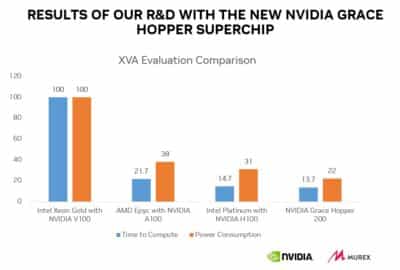
NVIDIA Grace Hopper Superchip Accelerates Murex MX.3 Analytics Performance, Reduces Power Consumption
After the 2008 financial crisis and increased risk-management regulations that followed, Pierre Spatz anticipated banks would focus on reducing computing expenses. As head of quantitative research at Murex, a trading and risk management software company based in Paris, Spatz adopted NVIDIA’s CUDA and GPU-accelerated computing, aiming for top performance and energy efficiency. Always seeking the …
ZDI-24-526: (Pwn2Own) VMware Workstation VBluetoothHCI_PacketOut Use-After-Free Privilege Escalation Vulnerability
This vulnerability allows local attackers to escalate privileges on affected installations of VMware Workstation. An attacker must first obtain the ability to execute high-privileged code on the target guest system in order to exploit this vulnerability. The ZDI has assigned a CVSS rating of 8.2. The following CVEs are assigned: CVE-2024-22267.






