


Author: admin
Seamless in Seattle: NVIDIA Research Showcases Advancements in Visual Generative AI at CVPR
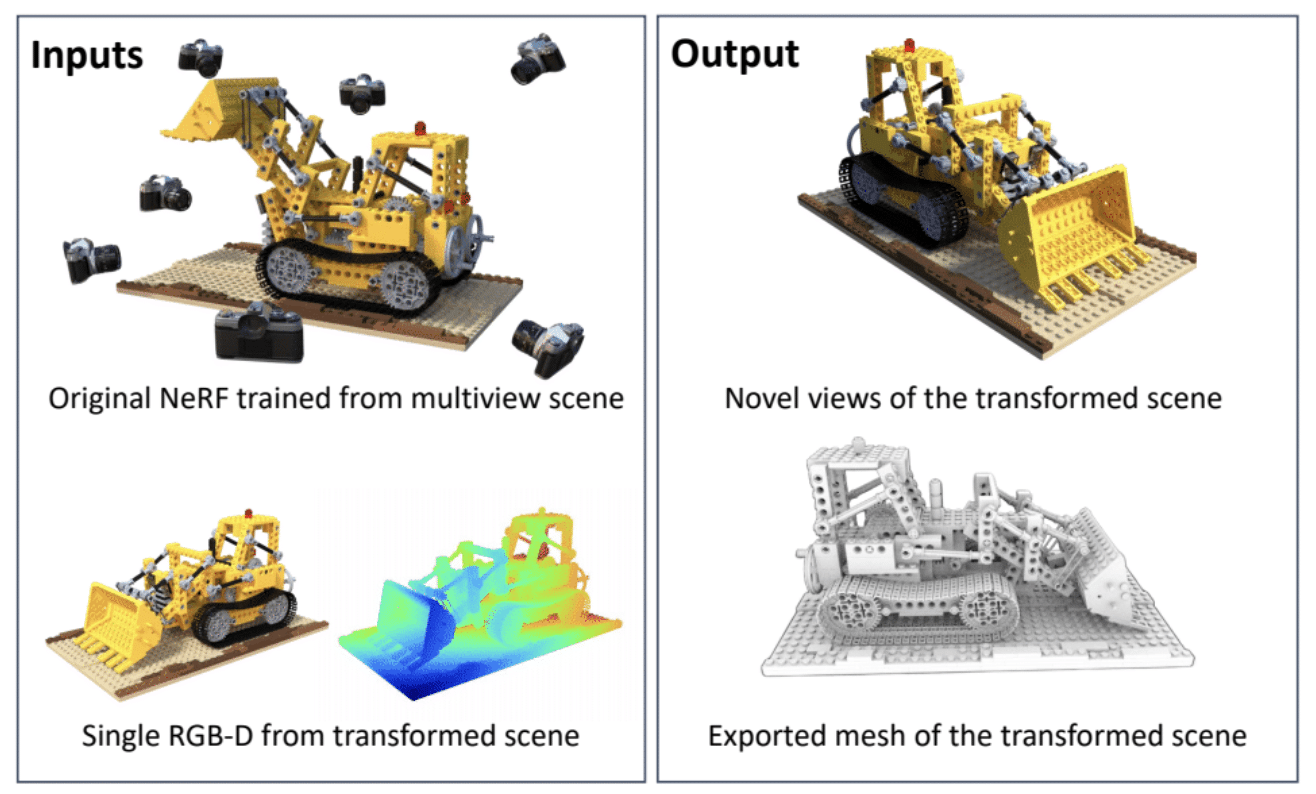
NVIDIA researchers are at the forefront of the rapidly advancing field of visual generative AI, developing new techniques to create and interpret images, videos and 3D environments. More than 50 of these projects will be showcased at the Computer Vision and Pattern Recognition (CVPR) conference, taking place June 17-21 in Seattle. Two of the papers …
Seamless in Seattle: NVIDIA Research Showcases Advancements in Visual Generative AI at CVPRRead More
NVIDIA Research Wins CVPR Autonomous Grand Challenge for End-to-End Driving
Making moves to accelerate self-driving car development, NVIDIA was today named an Autonomous Grand Challenge winner at the Computer Vision and Pattern Recognition (CVPR) conference, running this week in Seattle. Building on last year’s win in 3D Occupancy Prediction, NVIDIA Research topped the leaderboard this year in the End-to-End Driving at Scale category with its …
NVIDIA Research Wins CVPR Autonomous Grand Challenge for End-to-End DrivingRead More
‘Believe in Something Unconventional, Something Unexplored,’ NVIDIA CEO Tells Caltech Grads
NVIDIA founder and CEO Jensen Huang on Friday encouraged Caltech graduates to pursue their craft with dedication and resilience — and to view setbacks as new opportunities. “I hope you believe in something. Something unconventional, something unexplored. But let it be informed, and let it be reasoned, and dedicate yourself to making that happen,” he …
‘Believe in Something Unconventional, Something Unexplored,’ NVIDIA CEO Tells Caltech GradsRead More
ZDI-24-778: Linux Kernel USB Core Out-Of-Bounds Read Local Privilege Escalation Vulnerability
This vulnerability allows physically present attackers to escalate privileges on affected installations of Linux Kernel. Authentication is not required to exploit this vulnerability. The ZDI has assigned a CVSS rating of 7.1.
ZDI-24-777: Linux Kernel ksmbd Out-Of-Bounds Read Information Disclosure Vulnerability
This vulnerability allows remote attackers to disclose sensitive information on affected installations of Linux Kernel. Authentication may or may not be required to exploit this vulnerability, depending upon configuration. Furthermore, only systems with ksmbd enabled are vulnerable. The ZDI has assigned a CVSS rating of 4.0.
ZDI-24-776: (Pwn2Own) Oracle VirtualBox OHCI USB Controller Use-After-Free Local Privilege Escalation Vulnerability
This vulnerability allows local attackers to escalate privileges on affected installations of Oracle VirtualBox. An attacker must first obtain the ability to execute high-privileged code on the target guest system in order to exploit this vulnerability. The ZDI has assigned a CVSS rating of 8.2. The following CVEs are assigned: CVE-2024-21121.
NVIDIA Releases Open Synthetic Data Generation Pipeline for Training Large Language Models
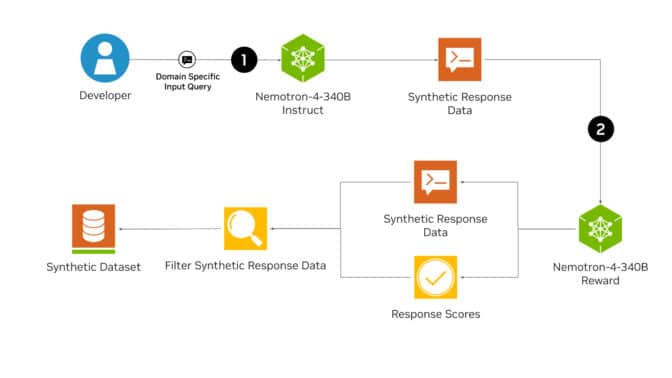
NVIDIA today announced Nemotron-4 340B, a family of open models that developers can use to generate synthetic data for training large language models (LLMs) for commercial applications across healthcare, finance, manufacturing, retail and every other industry. High-quality training data plays a critical role in the performance, accuracy and quality of responses from a custom LLM …
NVIDIA Releases Open Synthetic Data Generation Pipeline for Training Large Language ModelsRead More

‘The Proudest Refugee’: How Veronica Miller Charts Her Own Path at NVIDIA
When she was five years old, Veronica Miller (née Teklai) and her family left their homeland of Eritrea, in the Horn of Africa, to escape an ongoing war with Ethiopia and create a new life in the U.S. She grew up in East Orange, New Jersey, watching others judge her parents and turn them away …
‘The Proudest Refugee’: How Veronica Miller Charts Her Own Path at NVIDIARead More
ZDI-24-775: Autodesk AutoCAD STEP File Parsing Out-Of-Bounds Write Remote Code Execution Vulnerability
This vulnerability allows remote attackers to execute arbitrary code on affected installations of Autodesk AutoCAD. User interaction is required to exploit this vulnerability in that the target must visit a malicious page or open a malicious file. The ZDI has assigned a CVSS rating of 7.8. The following CVEs are assigned: CVE-2024-23120.
ZDI-24-774: (0Day) Autodesk AutoCAD STP File Parsing Memory Corruption Remote Code Execution Vulnerability
This vulnerability allows remote attackers to execute arbitrary code on affected installations of Autodesk AutoCAD. User interaction is required to exploit this vulnerability in that the target must visit a malicious page or open a malicious file. The ZDI has assigned a CVSS rating of 7.8. The following CVEs are assigned: CVE-2024-23129.






