


Month: October 2023
ZDI-23-1556: Siemens Tecnomatix Plant Simulation PAR File Parsing Heap-based Buffer Overflow Remote Code Execution Vulnerability
This vulnerability allows remote attackers to execute arbitrary code on affected installations of Siemens Tecnomatix Plant Simulation. User interaction is required to exploit this vulnerability in that the target must visit a malicious page or open a malicious file. The ZDI has assigned a CVSS rating of 7.8. The following CVEs are assigned: CVE-2023-37247.
ZDI-23-1555: Microsoft Windows DirectX GpuMmu Race Condition Local Privilege Escalation Vulnerability
This vulnerability allows local attackers to escalate privileges on affected installations of Microsoft Windows. An attacker must first obtain the ability to execute low-privileged code on the target system in order to exploit this vulnerability. The ZDI has assigned a CVSS rating of 8.8. The following CVEs are assigned: CVE-2023-38159.
Take the Wheel: NVIDIA NeMo SteerLM Lets Companies Customize a Model’s Responses During Inference
Developers have a new AI-powered steering wheel to help them hug the road while they drive powerful large language models (LLMs) to their desired locations. NVIDIA NeMo SteerLM lets companies define knobs to dial in a model’s responses as it’s running in production, a process called inference. Unlike current methods for customizing an LLM, it …
The October 2023 Security Update Review
Twenty years ago this month, Microsoft introduced the concept of “Patch Tuesday” – although the marketing folks wanted it called “Update Tuesday” (they didn’t like the word “patch”). Over the years, more companies joined the Patch Tuesday bandwagon. Here we are 20 years later, still talking about the latest security releases from Adobe and Microsoft. …
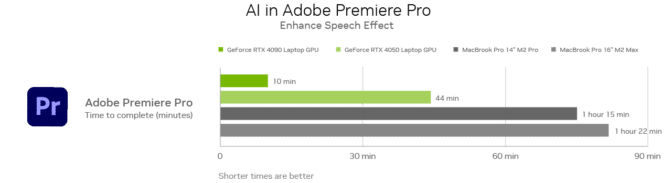
MAXimum AI Performance: Latest Adobe Updates Accelerated by NVIDIA GPUs Improve Workflows for Millions of Creatives
Generative AI is helping creatives across many industries bring ideas to life at unprecedented speed. This technology will be on display at Adobe MAX, running through Thursday, Oct. 12, in person and virtually. Adobe is putting the power of generative AI into the hands of creators with the release of Adobe Firefly. Using NVIDIA GPUs, …
ZDI-23-1536: Kofax Power PDF PDF File Parsing Out-Of-Bounds Write Remote Code Execution Vulnerability
This vulnerability allows remote attackers to execute arbitrary code on affected installations of Kofax Power PDF. User interaction is required to exploit this vulnerability in that the target must visit a malicious page or open a malicious file. The ZDI has assigned a CVSS rating of 7.8. The following CVEs are assigned: CVE-2023-42127.
ZDI-23-1535: Microsoft Windows UMPDDrvStretchBltROP Use-After-Free Local Privilege Escalation Vulnerability
This vulnerability allows local attackers to escalate privileges on affected installations of Microsoft Windows. An attacker must first obtain the ability to execute low-privileged code on the target system in order to exploit this vulnerability. The ZDI has assigned a CVSS rating of 8.8. The following CVEs are assigned: CVE-2023-36804.
ZDI-23-1534: Microsoft Windows UMPDDrvLineTo Use-After-Free Local Privilege Escalation Vulnerability
This vulnerability allows local attackers to escalate privileges on affected installations of Microsoft Windows. An attacker must first obtain the ability to execute low-privileged code on the target system in order to exploit this vulnerability. The ZDI has assigned a CVSS rating of 8.8. The following CVEs are assigned: CVE-2023-36804.
ZDI-23-1533: Magnet Forensics AXIOM Command Injection Remote Code Execution Vulnerability
This vulnerability allows network-adjacent attackers to execute arbitrary code on affected installations of Magnet Forensics AXIOM. User interaction is required to exploit this vulnerability in that the target must acquire data from a malicious mobile device. The ZDI has assigned a CVSS rating of 8.0. The following CVEs are assigned: CVE-2023-42128.
Keeping an AI on Quakes: Researchers Unveil Deep Learning Model to Improve Forecasts
A research team is aiming to shake up the status quo for earthquake models. Researchers from the Universities of California at Berkeley and Santa Cruz, and the Technical University of Munich recently released a paper describing a new model that delivers deep learning to earthquake forecasting. Dubbed RECAST, the model can use larger datasets and …
Keeping an AI on Quakes: Researchers Unveil Deep Learning Model to Improve ForecastsRead More